
Boost Local Sales with Advanced GEO-Based Advertising Strategies
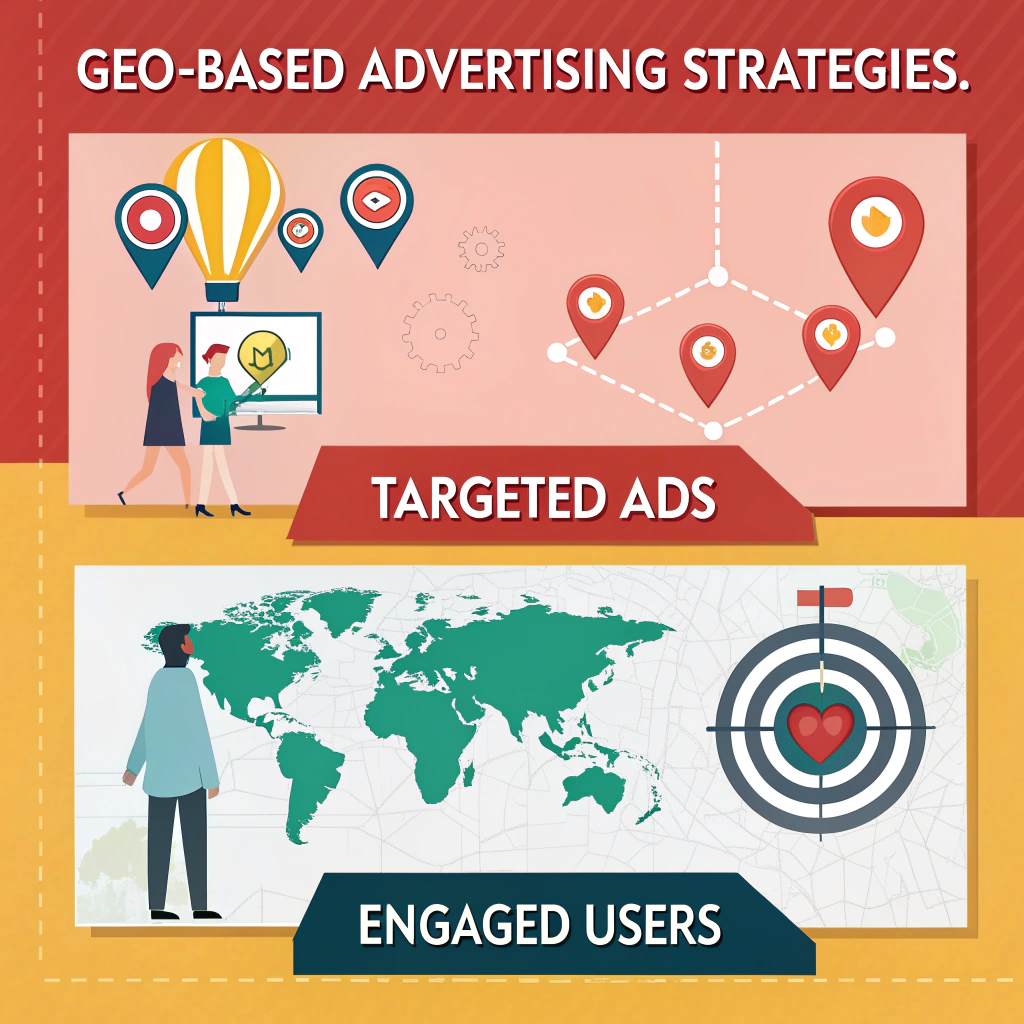
In an era where consumers expect personalized experiences tailored to their immediate needs, geo-based advertising has emerged as one of the most powerful tools for businesses targeting local markets. By leveraging location data and sophisticated targeting technologies, companies can deliver highly relevant advertisements to potential customers precisely when and where they’re most likely to convert. This strategic approach transforms traditional advertising into a precision instrument that drives foot traffic, increases local brand awareness, and significantly boosts sales.
Understanding the Foundation of GEO-Based Advertising
Geo-based advertising uses location data to target consumers within specific geographic boundaries. This can range from broad targeting at the city or regional level to hyper-local strategies focusing on specific neighborhoods, streets, or even individual buildings. The technology relies on GPS data, IP addresses, Wi-Fi signals, and cellular tower triangulation to determine a user’s location with remarkable accuracy.
The power of this approach lies in its relevance. A coffee shop can target commuters within a half-mile radius during morning hours, while a retail store can reach shoppers already browsing at competing locations. This contextual relevance dramatically increases engagement rates and conversion potential compared to traditional broad-spectrum advertising.
Modern geo-targeting goes beyond simple radius-based campaigns. Advanced strategies incorporate behavioral data, demographic information, and real-time conditions to create multi-dimensional targeting frameworks that identify not just where potential customers are, but who they are and what they’re likely to need at any given moment.
Advanced Geofencing Techniques for Maximum Impact
Geofencing represents the cornerstone of location-based marketing, creating virtual perimeters around physical locations. When users enter these predefined zones with their mobile devices, they become eligible to receive targeted advertisements, push notifications, or special offers. However, advanced geofencing strategies extend far beyond basic radius targeting.
Competitive geofencing targets customers visiting competitor locations, offering them incentives to switch brands or try your products. A restaurant can target diners at nearby establishments with compelling offers as they finish their meals, capturing customers when they’re already in a purchasing mindset within your category.
Event-based geofencing capitalizes on gatherings, conferences, concerts, or sporting events where your target audience congregates. A sports apparel retailer could target attendees at a marathon expo, while a technology company might focus on conference attendees interested in their product category.
Temporal geofencing adds the dimension of time to location targeting. Different messages resonate at different hours. A gym might target office workers during lunch hours with midday workout promotions, while shifting to after-work messaging in the evening. This temporal precision ensures your advertising budget focuses on moments when conversion probability peaks.
Leveraging Addressable Geofencing for Precision Targeting
Addressable geofencing takes location targeting to unprecedented precision levels by focusing on specific physical addresses or buildings. This technique proves particularly valuable for businesses targeting distinct customer segments or conducting account-based marketing campaigns.
Residential addressable geofencing allows businesses to target specific households based on demographic data, purchase history, or predictive modeling. A home services company can target homeowners in neighborhoods with houses built during specific decades, knowing these properties likely need particular types of maintenance or upgrades.
Commercial addressable geofencing targets specific office buildings or business parks, making it ideal for B2B companies or businesses serving working professionals. A catering service could target employees in specific corporate campuses during lunch ordering hours, while a dry cleaner might focus on professional service firms where employees require regular garment care.
This precision minimizes wasted ad spend by ensuring your messages reach only the most qualified potential customers, dramatically improving return on investment while maintaining or even reducing overall advertising costs.
Integrating Geo-Conquesting into Your Strategy
Geo-conquesting aggressively targets customers at competitor locations, aiming to capture market share by intercepting potential buyers before they complete purchases elsewhere. This bold strategy requires careful execution but delivers impressive results when implemented correctly.
The key to successful geo-conquesting lies in offering compelling differentiation. Simply advertising your presence isn’t enough when consumers are already at a competitor’s location. Your messaging must provide clear reasons to choose your business instead: superior pricing, better selection, unique products, exceptional service, or immediate incentives that outweigh the convenience of completing their current shopping trip.
Timing proves critical in geo-conquesting campaigns. Target customers as they enter competitor locations when they’re still in research mode, or as they exit when purchase intent remains high but they might be open to alternatives if their needs weren’t fully met. Advanced campaigns use dwell time analytics to identify customers spending extended periods at competitor locations, suggesting potential frustration or indecision that your business can address.
Harnessing Location-Based Retargeting
Location-based retargeting combines the power of geofencing with remarketing strategies, creating highly effective campaigns that nurture prospects through multiple touchpoints. When potential customers enter your geofence but don’t convert, location-based retargeting allows you to continue engaging them across various digital channels after they leave your targeted area.
This approach proves particularly effective for businesses with longer consideration cycles. An auto dealership can retarget visitors who stopped by the lot but didn’t purchase, serving them ads featuring vehicles they viewed along with special financing offers. A furniture store can remind browsers of specific products they examined, perhaps highlighting time-limited discounts that create urgency.
Sequential messaging strategies within location-based retargeting guide prospects through the customer journey. Initial ads might focus on awareness and product education, while subsequent messages emphasize differentiation, social proof, and ultimately compelling calls to action with limited-time incentives.
Optimizing Mobile Moments with Micro-Location Targeting
As consumers increasingly rely on smartphones for real-time information and purchasing decisions, micro-location targeting captures customers during critical decision moments. This strategy focuses on very small geographic areas—sometimes as precise as specific store aisles or departments—delivering messages when purchase intent peaks.
Near-me searches represent prime opportunities for local businesses. When consumers search for “restaurants near me” or “hardware store nearby,” they’re actively seeking immediate solutions. Optimizing your geo-targeted advertising to capture these high-intent searches ensures your business appears prominently when potential customers are ready to buy.
Beacon technology enables even more precise micro-location targeting within physical spaces. Retailers can use Bluetooth beacons to detect customers in specific store sections, triggering relevant offers or product information directly to their smartphones. A grocery store might send recipe ideas and coupons to shoppers in the produce section, while a bookstore could recommend new releases to customers browsing specific genres.
Measuring Success and Refining Your Approach
The effectiveness of geo-based advertising ultimately depends on rigorous measurement and continuous optimization. Advanced attribution models track how location-based campaigns drive both online and offline conversions, providing comprehensive insights into true campaign performance.
Foot traffic attribution measures how many people who saw your ads actually visited your physical location. This metric proves crucial for brick-and-mortar businesses, directly connecting advertising spend to store visits and, ultimately, sales. Sophisticated platforms can even measure visit duration and frequency, indicating customer engagement quality beyond simple foot traffic numbers.
Cross-device tracking ensures accurate measurement as customers interact with your campaigns across multiple devices. A consumer might see your geo-targeted ad on their smartphone during their commute, research your products on a tablet at home, and ultimately convert on a desktop computer. Attribution systems that connect these touchpoints prevent undercounting campaign effectiveness.
Continuously test different targeting radiuses, messaging strategies, dayparting schedules, and audience segments to identify optimal configurations. Geographic performance varies significantly based on local demographics, competition intensity, and market conditions. What works in one location might need adjustment for another, making ongoing optimization essential for maximizing returns.
Conclusion
Geo-based advertising represents a fundamental shift in how local businesses connect with potential customers, transforming generic mass marketing into precisely targeted campaigns that deliver the right message to the right person at the right place and time. By implementing advanced strategies including sophisticated geofencing, addressable targeting, geo-conquesting, location-based retargeting, and micro-location optimization, businesses can dramatically increase local sales while improving advertising efficiency.
Success requires moving beyond basic location targeting to embrace the full spectrum of geo-based advertising capabilities. The businesses that thrive in increasingly competitive local markets will be those that master these advanced techniques, continuously refine their approaches based on performance data, and maintain an unwavering focus on delivering relevant, valuable experiences to location-qualified prospects. As technology continues evolving and consumer expectations for personalization grow, geo-based advertising will only become more critical to local business success.